Gallery
Welcome to our workshop gallery. Conservation is all about balance—fixing damage and protecting the art for years to come, without losing what made the original piece special. Take a look at some of our recent projects to see the difference first hand.


-
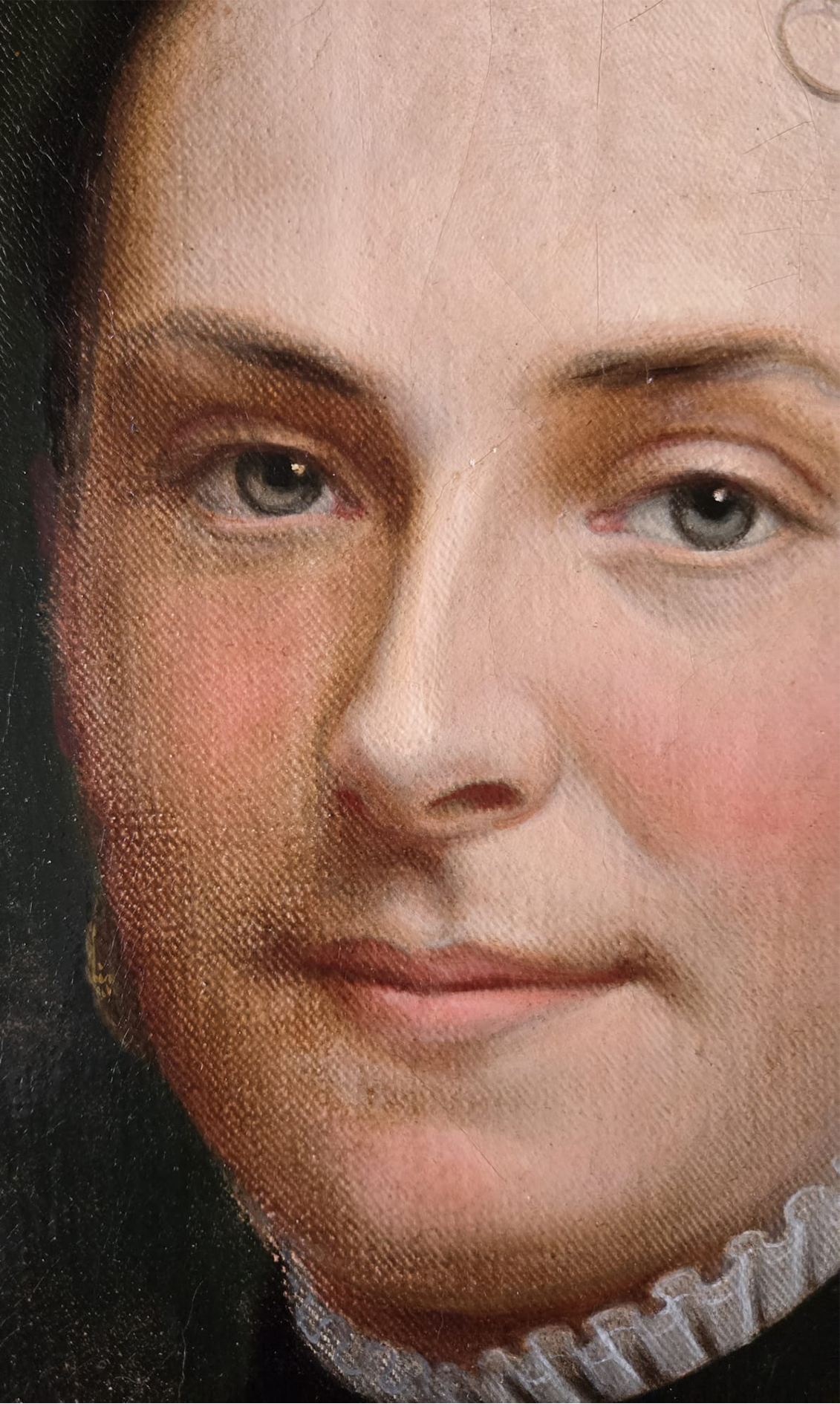
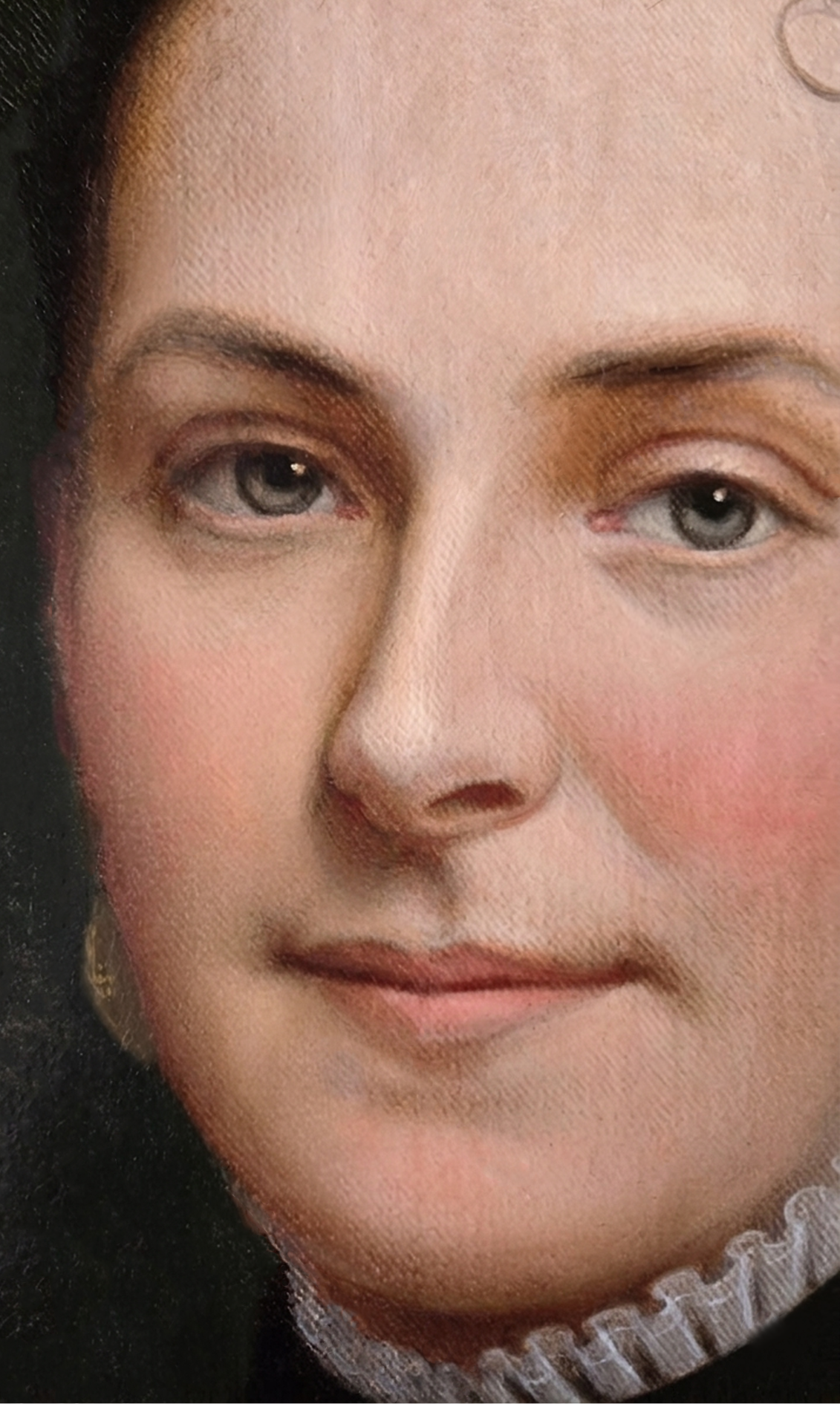
Thomas Linton, Oil on board, c. 1850
Painted around 1850, this domestic portrait of Margaret MacMillian with her young son, John Tillotson, had become obscured beneath a thick, discoloured varnish and ingrained dirt. Grime had settled into the recesses of the impasto across the flesh tones, lace collar, and ribbon at the mother’s wrist, creating dark lines that distorted the tonal range and dulled the surface. Fly-spotting and minor paint losses were visible throughout.
Treatment involved the careful reduction of the degraded varnish and targeted cleaning to release dirt trapped within the impasto. Fragile paint was consolidated, and areas of loss were infilled and reintegrated. The process restored clarity to the facial features, brightness to the costume, and vibrancy back into the reds, recovering the painting’s original balance of tone and texture.
-
Thomas Flintoff, Oil on canvas, 1880,
This portrait had been heavily damaged during an earlier restoration, which removed much of the sitter’s face on one side. The surrounding surface showed widespread cracking, abraision, and discoloured varnish that further disrupted the image.
Treatment involved stabilisation of the paint layer, reducing degraded varnish, and reconstructing the missing facial features using pre-conservation photographs as references. Cracks and small losses were filled and toned to reduce their visual prominence, and the damadged areas were carefully reintergrated through inpainting.
The completed treatment restored the sitter’s likeness and recovered a coherent tonal balance across the portrait.


-
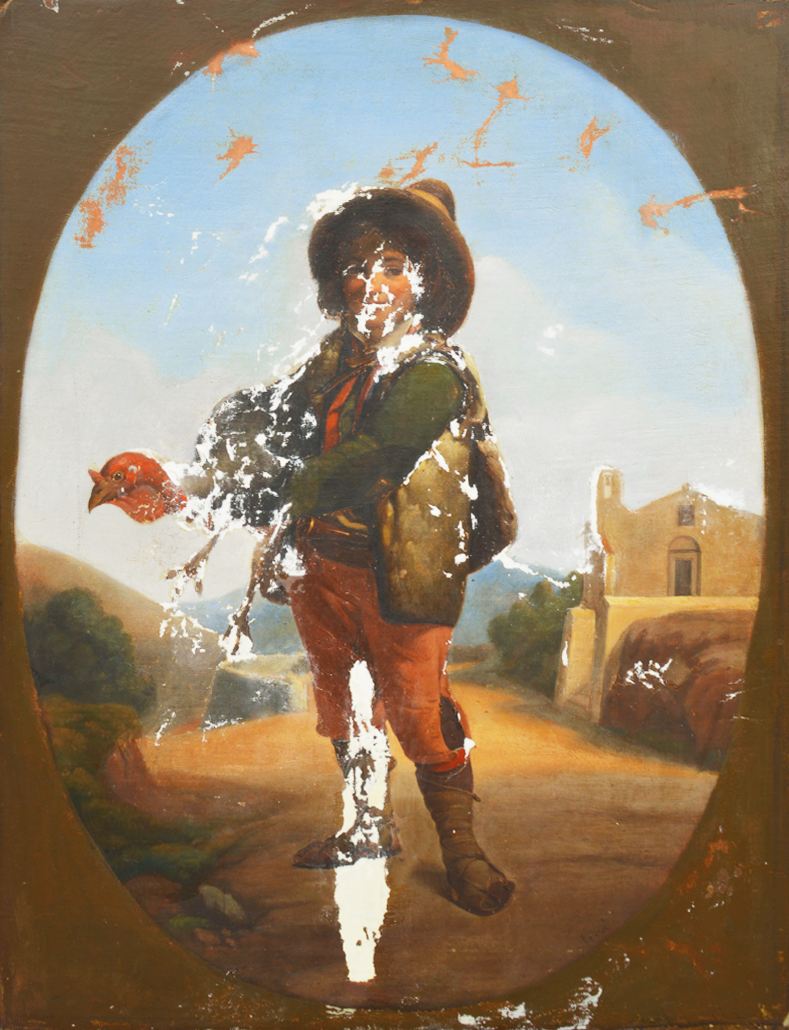
Guiseppe Mazzolini, Oil on Canvas, c. early 19th-century
At first glance this provincial scene appeared simply dulled by time, but treatment revealed how much had been concealed beneath the surface. Thick, discoloured varnish and poorly matched overpaint obscured earlier damage, while crude infills disrupted the artist’s palette and balance. As these additions were removed, the extent of the previous interventions became clear. Large areas of loss, visible as pale pink conservation fills, stretched across the sky and foreground.
The second photograph shows the painting in its mid-treatment phase. At this stage no varnish had been applied, and the surface therefore appears temporarily duller. This is a normal point in treatment, when cleaning has been completed but before the application of a new varnish layer.
The third photograph records the next transition. The painting has received an isolating varnish, and the losses have been textured and toned to prepare for inpainting. The colours begin to regain depth, yet the areas of loss are still visible before final retouching. Once inpainting is complete and a final varnish has been applied, the painting will recover tonal unity and visual coherence that were previously disrupted by earlier, intrusive repairs.

-
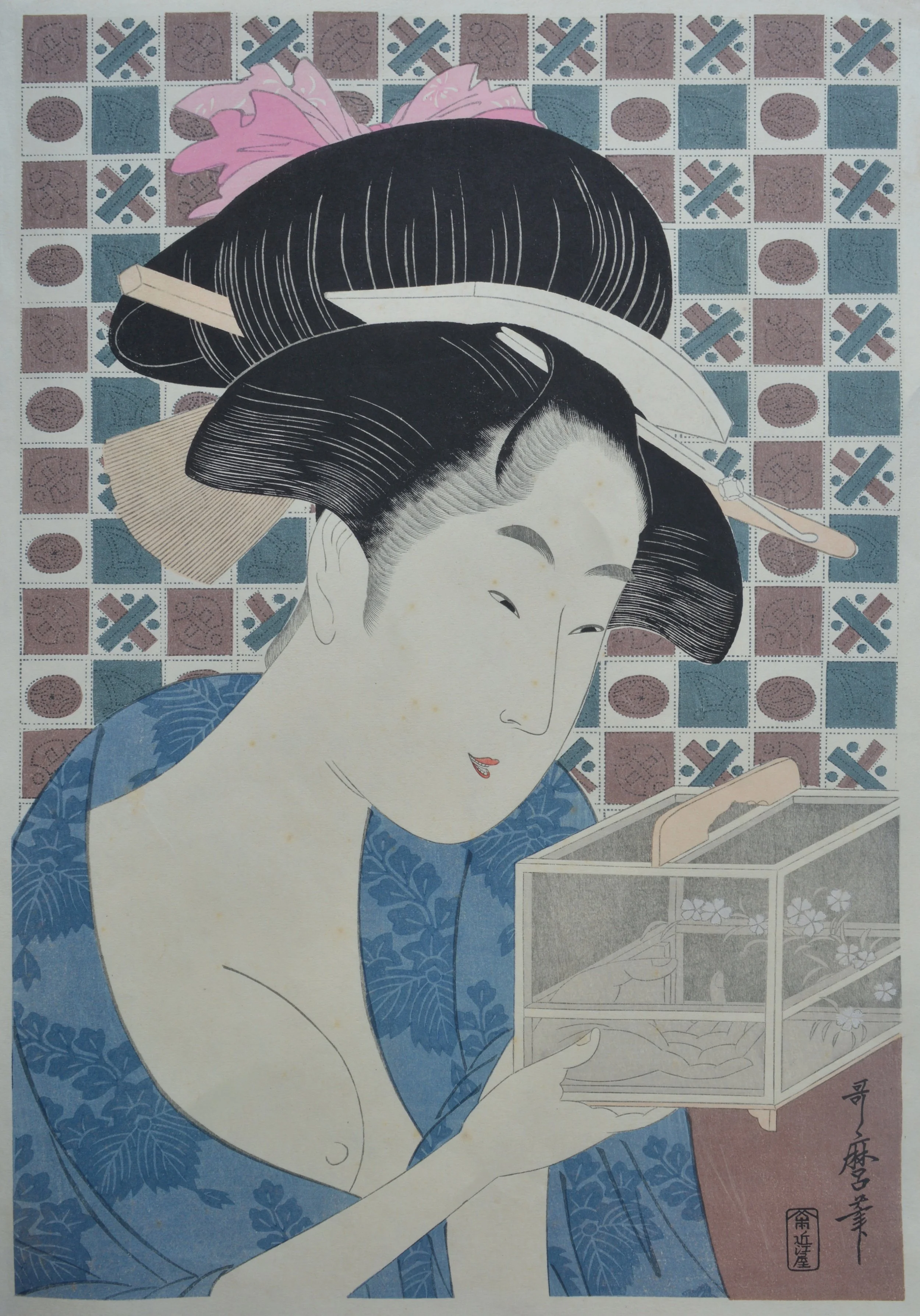
After Utamaro, Ink on paper, c. 1920s
This early 20th-century Japanese reproduction of a design by Kitagawa Utamaro, displayed surface discolouration and foxing which dulled the delicacyy of the image. Localised spot cleaning and stain reduction were undertaken in a minimally invasive manner, reducing distracting marks while preserving the paper’s character. The treatment restored clarity to the linework and colour, allowing the subject’s refinement to re-emerge.


-
Oil on cotton canvas, c. mid-20th-century
This decorative panel had sustained several large tears and distortions. The canvas was realigned, and tears were repaired using a heat-set adhesive before the work was relined for structural stability. Areas of paint loss were then filled and carefully inpainted, restoring unity to the composition while preserving traces of age and use.


-
Polymer-based paint & gilding on wall, c. 1960s
Conservation treatment undertaken as part of a large-scale project to restore the interior wall paintings of a Greek Orthodox Church in South-East Melbourne, which had been impacted by arson. Treatment involved the careful wet cleaning of smoke and grime that had become embedded in the paint surface, stabilisation of fragile paint passages, and consolidation of flaking gilding.
Images of conservation work © Hidden Hands Workshop. Original Artworks remain copyright of their owners.
